Analysis
Managing the Collapse: France's Response to Crisis is Armed Force
On the fifth consecutive weekend of protests, the expansion of police immunity reveals the bankruptcy of the European social model
Mizan · Edited by: Prof. Dr. Adriano de Assis Ferreira ·
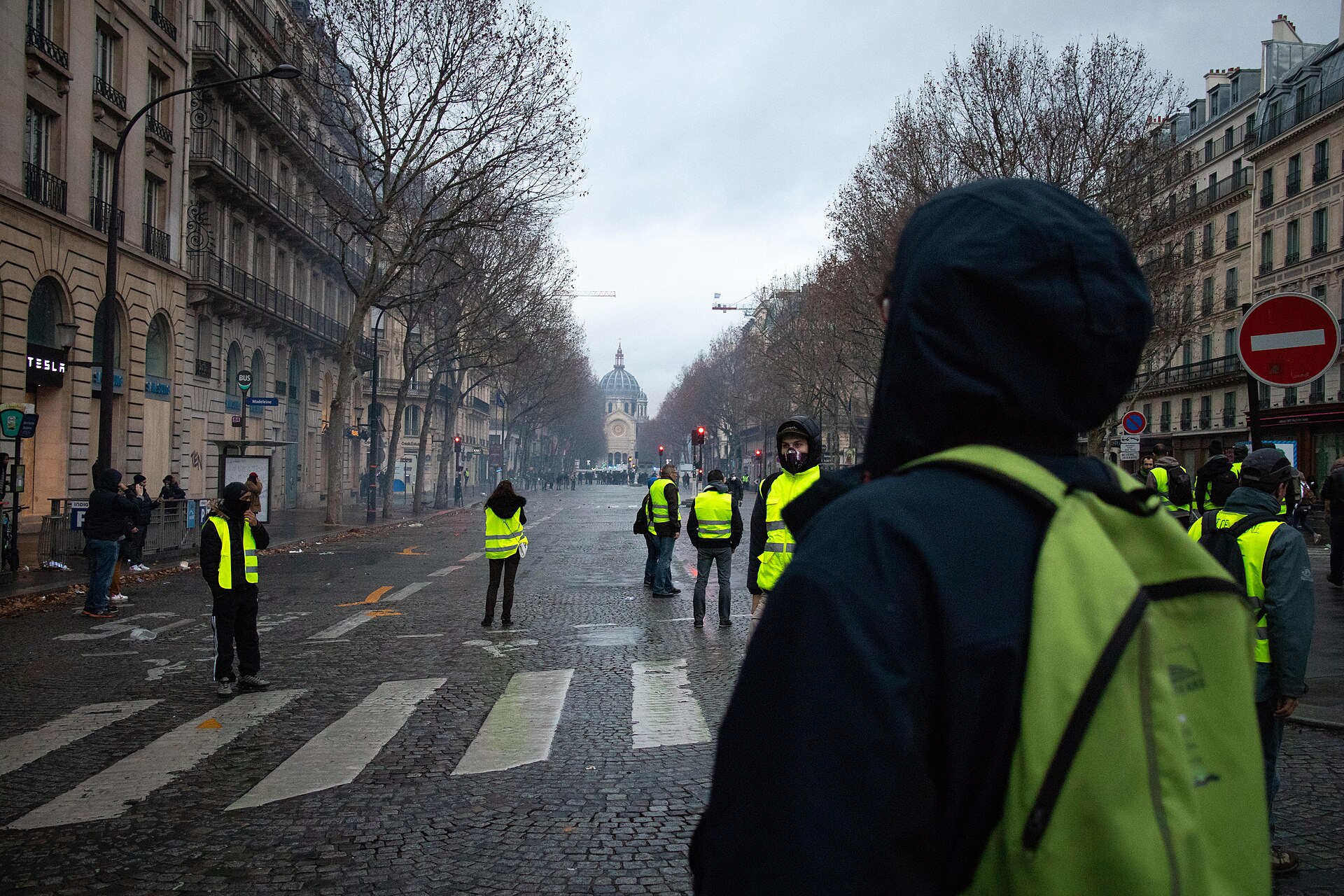
France did not march this weekend merely over the price of bread or gasoline. On the fifth consecutive Saturday of protests across the country, what drove more than 100,000 people to the streets—and over a hundred to police stations—is the direct clash between the State's inability to guarantee a quality of life and its haste to expand police immunity. As reported by RFI, the agenda that began in decaying high school corridors has grown to swallow the revolt against inflation and the repudiation of a new law that presumes the legality of the use of weapons by security forces.
The script of public readings repeats its classic roles. The official version, embraced by the European center-right and liberals, views the demonstrations merely as a challenge of public order and political pedagogy. For this reading, inflation is a passing global storm and the new police law is just a guarantee of "security" for officers facing increasingly hostile streets, as noted by the Russian state agency TASS when highlighting the core of the parliamentary conflict. In the other trench, the progressive lens sees a distribution deficit: it accuses the government of unjust austerity, demands more funding for public services, and condemns State violence as an authoritarian deviation that could be corrected with more democracy and taxes—traditional Yellow Vest banners recalled by Al Jazeera.
But both reading frameworks stall on the illusion that the old social pact can still be saved. Official liberalism ignores that when the market can no longer provide a dignified survival through labor, the State must swap the management of welfare for the management of brute force. The aggressive police response is not a behavioral deviation; it is the structural policy that remains when the promise of prosperity fails. Meanwhile, the progressive left errs in demanding the return of a Welfare State that contemporary capitalism simply can no longer finance. In a world of financial rent-seeking and brutal global competition, the wealth needed to sustain old social democracy cannot be captured within national borders.
What was seen in Paris, Lyon, and Nantes—cities where G1 recorded the tensest fronts, including attacks on press crews—is the portrait of a system experiencing material fatigue. Europe, which was once the prime showcase of humanized capitalism, has become a stage where inflation corrodes the present and precarity stalls the future of new generations. As a structural response, the State legislates so its uniformed officers can pull the trigger without the immediate presumption of guilt.
The violence on French streets is not a democratic anomaly, but the State's adaptation to its new primary role: containing the social surplus that the market no longer absorbs. When the best institutional response to the cost-of-living crisis is to widen the legal immunity of those wearing a uniform, the question remains: how much longer can police force shield an economic model that has lost all capacity to convince?
Sources
- RFI · ● public, FR
- TASS · ▲ state, RU
- Al Jazeera · ▲ state, QA
- G1 · ■ private, BR
Editor in charge: Prof. Dr. Adriano de Assis Ferreira · Lattes · ORCID