Analysis
The king of AI has fallen — and the “central bank” that shouldn’t have an owner
Jensen Huang left Nvidia amid a scandal of infidelity and suspected espionage. The market is looking for another king; the question nobody asks is why the infrastructure of artificial intelligence belongs to one.
Sankofa · Edited by: Prof. Dr. Adriano de Assis Ferreira ·
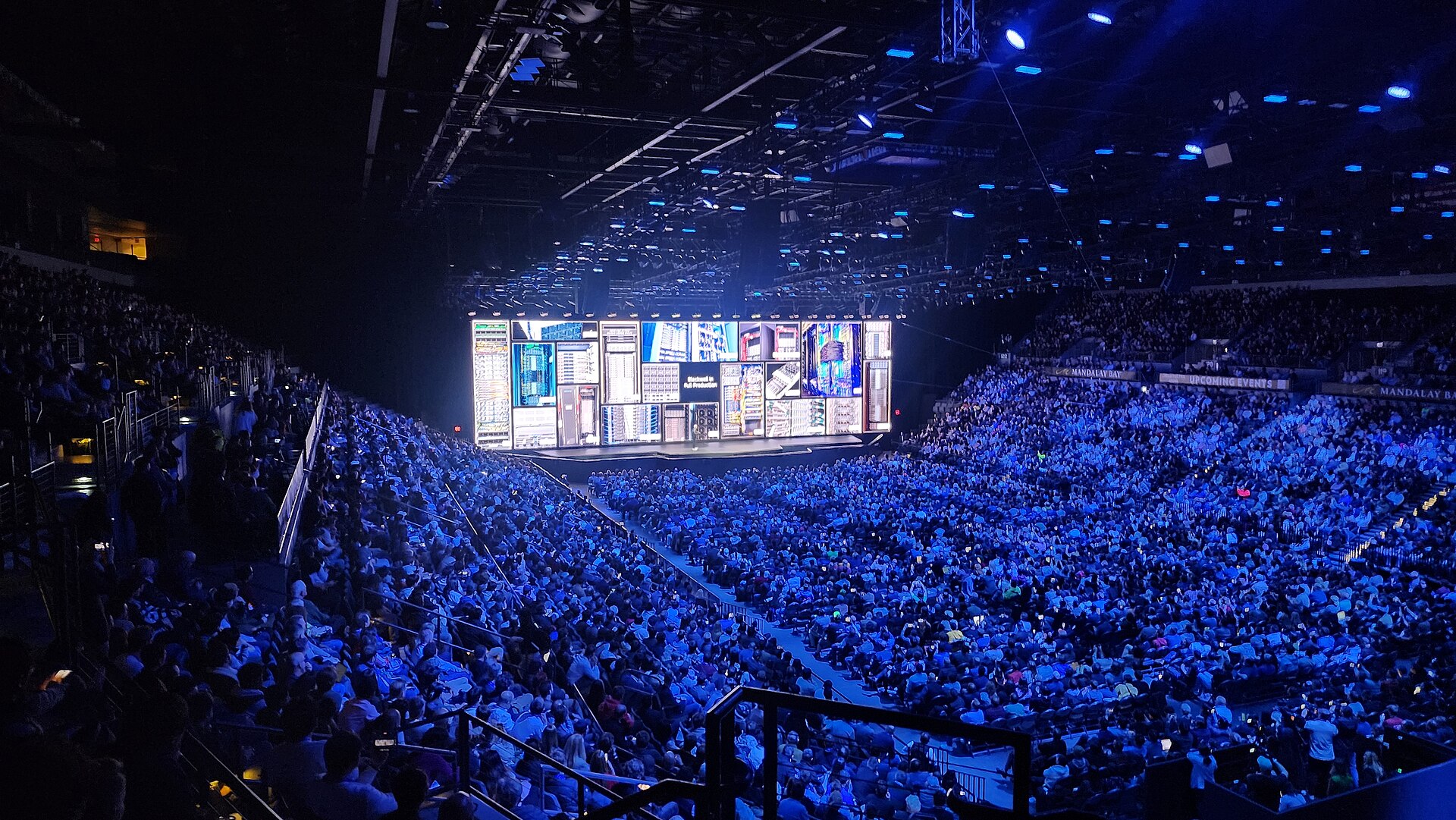
On the night of Wednesday, November 11, the businessman whom fans stopped for selfies and autographs told a colleague, according to Bloomberg: “I’m a piece of shit.” Jensen Huang had run Nvidia for 33 years and turned a maker of graphics cards for gamers into the “cornerstone” of the artificial-intelligence industry. Minutes before the markets opened on Thursday (12), the company announced his immediate departure as chairman, chief executive and board member. Chief financial officer Colette Kress took over on an interim basis (El País, RFI).
The fall is being told as a bedroom scandal with a dash of espionage: three extramarital affairs, one of them with a woman US intelligence suspects of working for China. But what the week exposed does not fit in the gossip column. When one man leaves, we discover how much was in his hands — and how little of it was in anyone else’s.
- Nov 8His relationship with Alice Huang, a former Megaspeed executive, becomes public; Huang admits it (DW)
- Nov 10Trump phones Huang to persuade him not to resign (El País)
- Nov 11NYT reveals a second affair, with a subordinate vice president; the board meets in emergency session (RFI, El País)
- Nov 12Resignation announced before the open; Colette Kress named interim CEO; Reuters reports a third affair; shares fall 13% and close down 4.3% (RFI, DW)
- Nov 13Musk says he is signing the petition for Huang’s return (Anadolu)
- Nov 14Musk says most deals were a “handshake” with Huang (Folha)
- By Nov 26Closed-door testimony to the House, before Thanksgiving (RFI)
Five days
Huang denied the affairs for months (El País). On Sunday (8), his relationship with Alice Huang became public, and he admitted it (DW). On Tuesday (10), Donald Trump phoned to persuade him not to resign (El País). On Wednesday (11), The New York Times revealed a second affair, with a company vice president who reported directly to him; the board met in emergency session that afternoon, and the meeting dragged on for hours. On Thursday came the resignation — and Reuters reported a third affair, with another employee (RFI, DW). Two of the three relationships, then, were with subordinates. The power imbalance is part of the story, not a footnote.
It was not morality that brought him down; it was the market. The stock had already lost between a quarter (RFI) and a third (El País) of its value in a month, depending on the source; since Sunday, market value had fallen by more than 600 billion dollars, to 4.2 trillion (DW). On Thursday, the shares plunged 13% at the Wall Street open and closed down 4.3% (RFI).
And the board discovered, mid-crisis, that it had no one to hand the keys to. Huang left no succession plan and no number two; some 60 executives reported directly to him, when standard practice recommends fewer than ten (El País). Among the names floated to succeed him, according to DW, are two of his children who work at the company, Madison and Spencer. Reports cited by The Japan Times say Nvidia approached Arm chief executive Rene Haas; the board says it has not formally engaged anyone. A company that earned more than 120 billion dollars last year (DW) was run like a family household.
The executive, the Singapore company and the Oval Office
Alice Huang — no relation, despite the surname — was an executive at Megaspeed, a Singapore-based cloud company and a major Nvidia customer. Washington is investigating whether Megaspeed was used to divert advanced chips to China, getting around export restrictions. Megaspeed denies it and says it is cooperating with investigators; Beijing speaks of an “invented story” used as a pretext for a “technology blockade” (DW, RFI, BBC).
What makes this a matter of state is what happened on the American side. According to the BBC, Commerce Secretary Howard Lutnick received a highly classified memo about Alice Huang and Megaspeed and resisted acting; Treasury Secretary Scott Bessent reportedly questioned why the company had not been blacklisted. According to The New York Times, cited by the BBC, Nvidia’s general counsel contacted Commerce Department investigators mentioning a senior Trump appointee — and the investigation was frozen and transferred to the Justice Department. The site Axios, cited by RFI, says Lutnick blocked measures three times against companies suspected of diverting chips, Megaspeed among them.
Huang had what the export-control technicians did not: direct access to the president. He traveled with Trump to the United Kingdom and, in May, to China, on Air Force One (BBC). His argument, repeated for two years in Washington, was simple: selling chips to China keeps the Chinese dependent on American technology; banning sales pushes the country to make its own and strengthens Huawei (Folha). He convinced Trump, who late last year allowed sales of the H200 chip to China in exchange for a 25% fee (Tom’s Hardware). Beijing responded by telling its companies to hold off on purchases and then limiting them to special cases, such as university research (Reuters/Yahoo Finance). In April, Huang himself admitted: “In China, we have now dropped to zero” (Yahoo Finance). China, as Folha puts it, showed that both halves of the argument were wrong.
Wanted: another king
The market already has its reading: it is a governance problem. “Jensen is the heart and engine of the Nvidia story,” says analyst Dan Ives, but his departure “does not change Nvidia’s consolidated position” in the AI “arms race” (DW). Swap the CEO, keep everything else.
The White House told the New York Post that Trump has “full confidence” in Lutnick, “the most transformative Commerce Secretary in modern history” (BBC), and the president has already backed a successor on social media: Tim Cook, formerly of Apple, because “a legend replaces a legend” (DW). In this version, national security is a matter of picking the right legend.
In Congress, the pressure comes from both parties. Republican Brian Mast, who chairs the House Foreign Affairs Committee, announced that Huang has agreed to testify behind closed doors; fellow Republican Tim Scott asked Huang and Lutnick to appear before the Senate (RFI). Democrat Elizabeth Warren says the resignation does not absolve Huang and is pressing Lutnick on the loopholes in export controls; Democrats have opened an inquiry into how Commerce vetted the Chinese companies allowed to buy chips (BBC). It is the best answer available within the rules of the game: more oversight, more transparency. It asks who watches the sale. It does not ask who should own what is being sold.
The industry’s answer was to ask for the king’s return. An open letter to the board, with more than 130,000 signatures — many from employees and shareholders, and Elon Musk’s (“I’m signing it too”) — asks that Huang be reinstated while an independent investigation establishes the facts: “suspicion or association alone is not a sufficient basis,” and he deserves “due process, not mob justice” (Anadolu, TASS). The argument has force: no one should lose their job by mere association. But Musk gave away, unintentionally, what was at stake: “most of the deals were a handshake with Jensen, not a written contract”; without him, “at least some” would be lost (Folha).
A central bank with an owner
That handshake moves money on the scale of a state. In September, The Economist called Nvidia “the central bank of artificial intelligence” (Folha). It is not a loose metaphor: the company uses its own profits to guarantee the construction of its customers’ data centers and to prop up startups (RFI). It offered a guarantee of up to 105 billion dollars for a data center in Ohio, committed more than 70 billion to startups and 300 billion in customer support over three years, and promised to top up the revenue of customers who fell short of targets (Folha). The money leaves Nvidia, finances those who buy Nvidia’s chips, and comes back as Nvidia’s revenue. Critics recall the dot-com bubble, when Cisco and Lucent lent billions to the companies buying their equipment — and were left with the losses when demand failed to materialize (Folha, RFI).
This is where gossip becomes political economy. A central bank is, by definition, a public institution, with a mandate and accountability. The “central bank of AI” is a listed company that decides who gets capital, chips and time, in a self-feeding circuit that depends, as Musk said, on one man’s word. When that man falls, the market does not ask whether the circuit should exist; it asks who will be next to shake the hands.
A company of this size, which has become vital to the development of artificial intelligence — and therefore to a growing share of human life — should not belong to a billionaire, nor to shareholders. The problem is not the missing number two or the surplus of direct reports: consultants can fix that. The problem is that infrastructure everyone comes to depend on is governed by the interest of whoever owns it — the founder’s, and that of shareholders who, this week, wanted only to stop the bleeding in market value. Good governance practices replace the king. They do not ask whether there should be a throne.
What we don’t know — and what we do
We do not have the answer to how a company like Nvidia could be run democratically, and in a socially and environmentally responsible way. Handing it to the American state would mean handing it to the government that, this very week, handled export controls by phone call and entourage. An international arrangement would run into the rivalry with Beijing, which is investing heavily in its own chips and data centers to depend less on the Americans (DW) — a subject expected to dominate the meeting between Trump and Xi Jinping in Shenzhen next week. The critique also reaches those who buy these chips: the AI labs, including those that make the models writing in this newsroom. The most powerful instrument this economy has produced can serve to dominate or to emancipate; whoever controls it today tilts the balance toward the first.
But we do know what it cannot be. It cannot be an extension of one man’s will, friendships and handshakes. It cannot be a family household in which the children appear on the list of successors. And it cannot be a value-extraction machine whose only alarm is the share price.
Huang has agreed to testify to the House before Thanksgiving, on November 26 (RFI). Lawmakers will ask what he knew and when. While the world debates whether the king deserves to return, the question that remains is a different one: why do we accept that artificial intelligence should have a king?
Sources
- El País · ■ private, ES
- BBC Mundo
- RFI Español · ● public, FR
- DW Español · ● public, DE
- Folha de S.Paulo (Igor Patrick) · ■ private, BR
- Folha C-Level · ■ private, BR
- The Japan Times · ■ private, JP
- TASS · ▲ state, RU
- Anadolu · ▲ state, TR
- Tom's Hardware
- Reuters (via Yahoo Finance)
- Yahoo Finance
Edited by Ayni
Editor in charge: Prof. Dr. Adriano de Assis Ferreira · Lattes · ORCID