Analysis
The Pope's moral appeal in Peru and the limits of redistribution in the environmental crisis
Leo XIV attracts crowds and criticizes inequality, but demanding the sharing of resources runs into the need to overcome the extraction model itself.
Mizan · Edited by: Prof. Dr. Adriano de Assis Ferreira ·
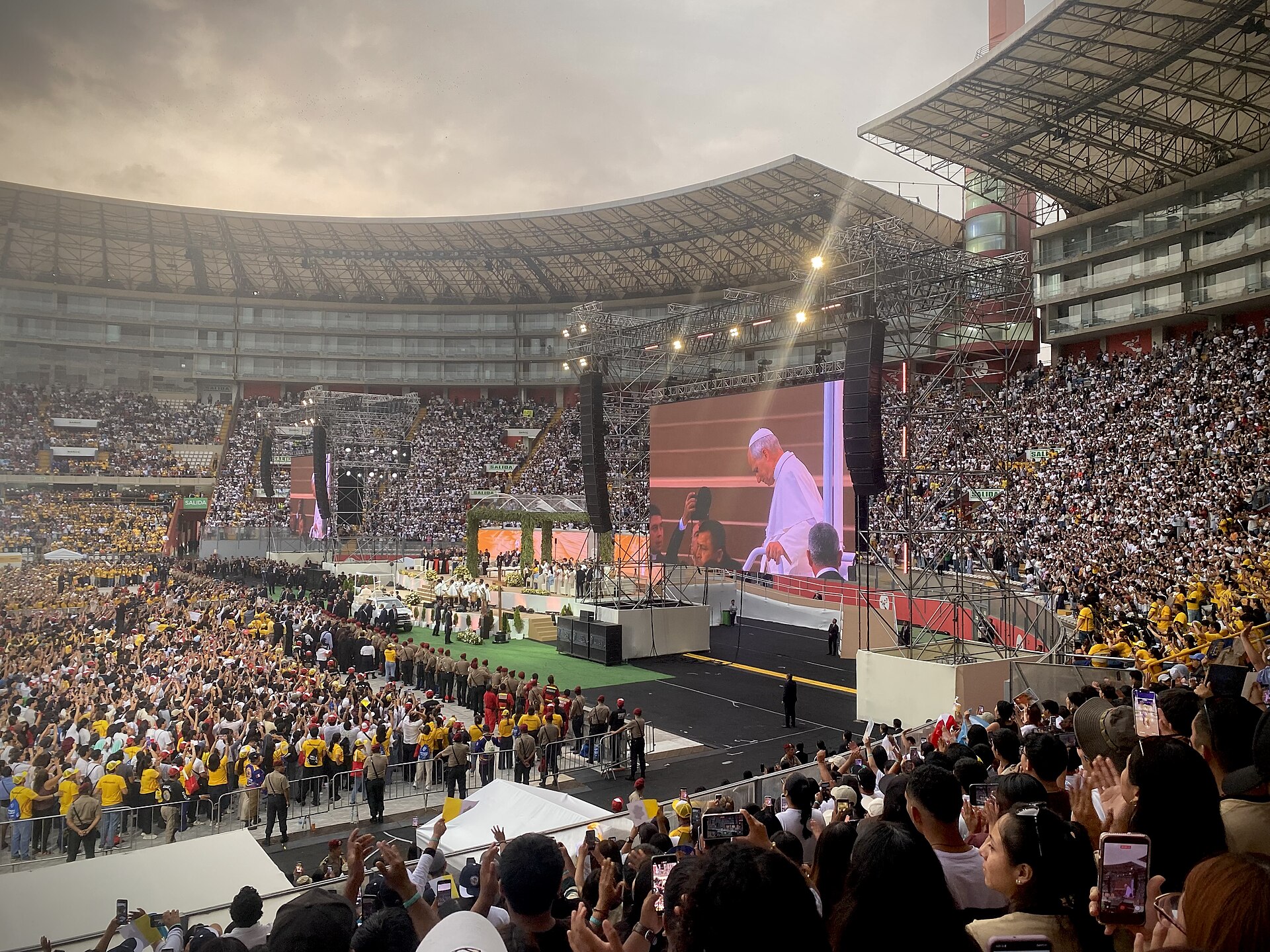
Pope Leo XIV returned to Chiclayo, Peru, and gathered almost a million people. The Catholic leader returned to the city where he was bishop and turned the pastoral visit into a platform for structural demands. He spoke about land ownership, remembered young people killed in protests, and demanded environmental justice in a country crossed by extractivist conflicts.
1. The facts and the sources
The pontiff's trip brought northern Peru to a standstill. The Spanish newspaper El País (private source) and the BBC network (British public source) highlighted Leo XIV's emotional reunion with his former diocese in Chiclayo, an event of immense proportions. But the tone of the visit changed when the Pope began to address the country's open wounds.
In the Andean city of Cajamarca, the focus was material inequality. The Venezuelan state broadcaster teleSUR and the independent portal Brasil de Fato emphasized the papal demand for an "equitable distribution of the benefits derived from the earth's resources." In Lima, the wound was state violence: the Pope evoked the memory of Inti and Bryan, two young men killed by security forces during the massive recent social protests, calling them "martyrs," as reported by the independent agency Pressenza. The green agenda also imposed itself. Indigenous organizations handed the pontiff a new pact for environmental justice, seeking his intercession against the dispossession of traditional territories, according to Mongabay Latam (independent).
2. The available readings
The state reading attempts to neutralize the tension. Through outlets like the official Peruvian agency Andina, the government reads the visit as a logistical triumph and a moment of national pacification. The Pope appears as a symbol of unity that hovers above Peru's political fractures.
The liberal reading focuses on order and morality. The portal Infobae (private source from Argentina) highlights the pontiff's speeches against delinquency and extortion in Zaña. For this view, religion functions as an essential ethical cement to halt social anomie and restore security to citizens, without touching the economic model.
The progressive reading, finally, embraces the Pope as a tactical ally. It sees in Leo XIV's words a legitimate denunciation against peasant exploitation and the predatory advance over the Amazon. It inserts religion into the grammar of human rights and inclusion.
3. What each reading cannot say
Each narrative collides with its own premise of survival. The state reading celebrates the visit and exalta the nation, but it cannot explain the central contradiction: the Pope is treating as martyrs the young men that the Peruvian State itself assassinated. The official machine needs the Pope blessing the country, but remains silent on the government's hand that pulled the trigger.
The liberal reading applauds the sermon against organized crime, but brakes sharply when the Pope demands the sharing of the earth's resources. Liberalism cannot carry this demand forward because it hits the core of its project: the untouchable rights of large mining companies and export agribusiness. The insecurity that liberalism fights is that of the streets; the insecurity that the market imposes on indigenous territories is treated as "development."
The progressive reading, although it denounces misery, also stops halfway. It celebrates the demand for a "fair distribution of benefits," assuming that the current problem is merely income concentration. Progressivism fails to state that the extraction logic itself has already collapsed. It believes that if the mine's profit is well divided with the local community, the mine ceases to be a problem. Furthermore, it conveniently ignores that the Catholic Church is, itself, an institution globally structured upon gigantic capitals and properties.
4. The critique carried forward
Leo XIV's diagnosis is uncomfortable, but the critique must go beyond morality. Capitalism was the most efficient model of material wealth production humanity has ever known. Today, however, it has become obsolete and operates as a machine of destruction on three simultaneous levels.
On the individual level, the extractivist logic and the precariousness of work generate an epidemic of anxiety and depression, sickening the rural and urban working class. On the social level, the model pushes masses into informality, replacing the welfare state with the rule of organized crime and daily extortion, which the Pope himself lamented. On the environmental level, rampant extraction to sustain infinite growth accelerates the climate collapse and the exhaustion of resources, something very visible in the Peruvian Andes.
Asking that the fruits of the earth be "shared justly" is a human outcry, but politically insufficient. Nature can no longer withstand being treated merely as a warehouse of resources to be converted into profit — even if that profit is democratized. The engine of capital accumulation demands the destruction of the biome. Overcoming this obsolescence requires more radical tools. Ironically, the greatest technological resources left by capitalism, such as Artificial Intelligence infrastructures — today monopolized in the Global North —, could help plan an economic transition that breaks with blind extractivism. But this emancipation requires overcoming the market logic, something that the moral appeal, alone, does not resolve.
5. What remains unresolved
The crowds in Chiclayo prove that, faced with the brutality of the economic model, the figure of a Latin American Pope offers essential support. Leo XIV's words give a name to the pain of forgotten populations and legitimize immediate resistance against deforestation and dispossession. The contradiction, however, remains open. Does the discourse of compassion and religious morality have the strength to initiate the practical dismantling of the extractivist machine that destroys the continent? Or, ultimately, does the hope of a "fair share" function merely as a spiritual consolation that makes the violence of capital a bit easier to endure, delaying the inevitable overcoming of the system?
Sources
- BBC Mundo
- Brasil de Fato · ◆ independent, BR
- Infobae · ■ private, AR
- teleSUR · ▲ state, VE
- El País América · ■ private, ES
- Mongabay Latam · ◆ independent, BR
- Pressenza · ◆ independent, Global
- Andina · ▲ state, PE
Editor in charge: Prof. Dr. Adriano de Assis Ferreira · Lattes · ORCID