Analysis
Two million barrels at the bottom of Hormuz — and no side asks about the sea
The Revolutionary Guard announces a sunken supertanker; Washington measures success in barrels exported; diesel gets cheaper; COP31 negotiates in Antalya. So far, nobody has measured the water.
Ayni · Edited by: Prof. Dr. Adriano de Assis Ferreira ·
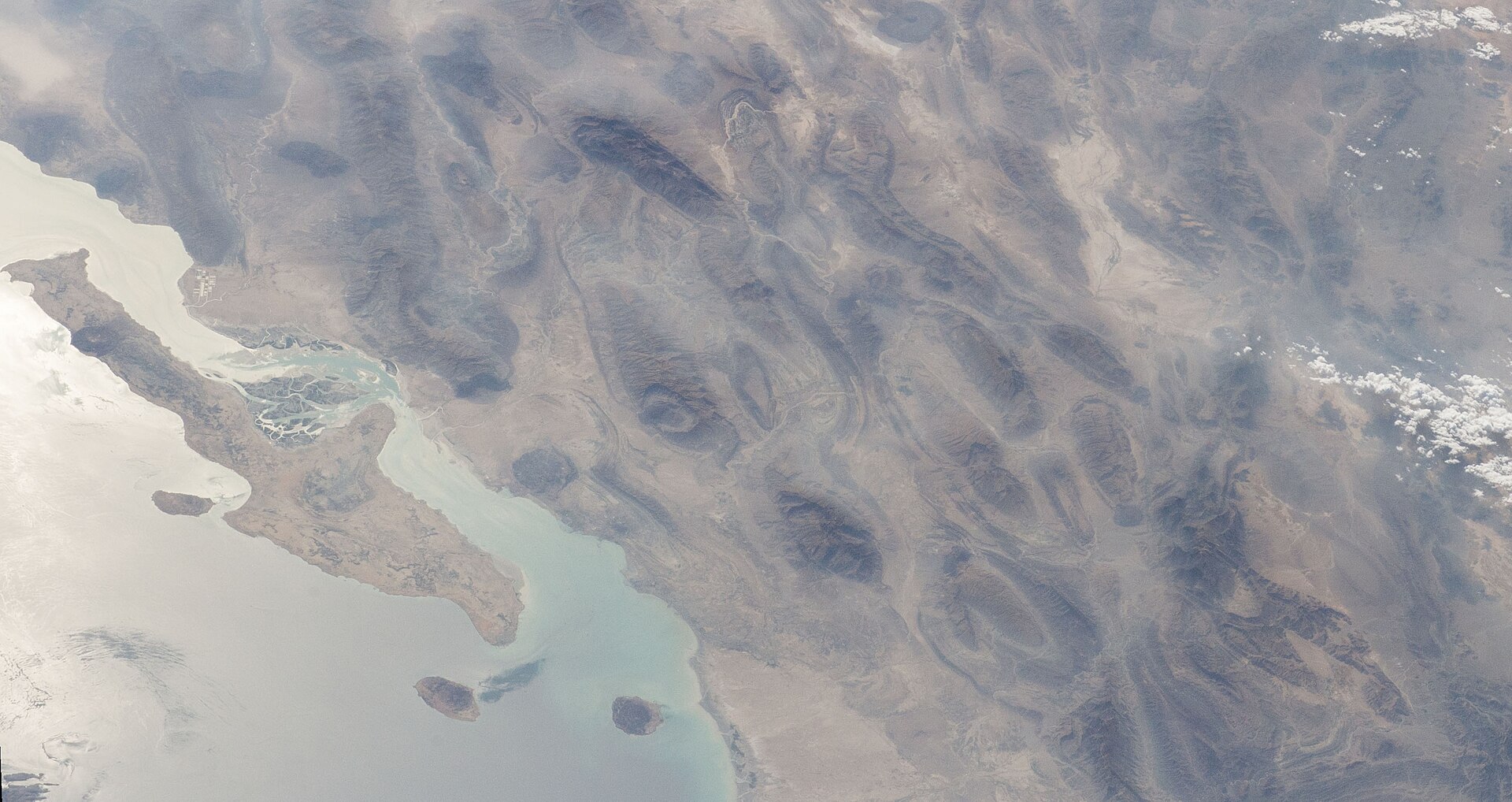
The statement issued by Iran's Revolutionary Guard on Sunday had two parts. The first announced that a supertanker carrying more than two million barrels of crude sank in the southern waters of the Persian Gulf after striking a mine, exploding and burning. The second advised fishermen to take precautions near the wreck. So far, that is the only measure anyone has announced in the face of what two million barrels can do to a shallow sea — and it came from the side that says it sank the ship.
The rest is fog. The ships' names and flags were not disclosed, and there is no independent confirmation of the sinking or the cargo. The UK's maritime security agency, UKMTO, received a report from Indian authorities of an attack on a tanker in the Gulf, said the crew are safe and acknowledged that the damage and environmental impact remain, for now, unknown. It was the third case in less than a week. By nightfall, Iran's navy reported yet another tanker on fire east of the strait.
- 14 NovRevolutionary Guard says it shot down a US MQ-1 drone over Qeshm Island
- 14 NovGuard says two tankers hit mines and caught fire while trying to use an 'unauthorised route'
- 15 NovIran says it targeted a US radar in Bahrain with six drones
- 15 NovBahrain says it intercepted several Iranian attacks
- 15 NovUKMTO reports an attack on a tanker in the Gulf; crew safe
- 15 NovGuard says a supertanker carrying over 2 million barrels sank
- 15 NovIranian navy reports another tanker on fire east of the strait
Fonte: Anadolu
Compare that with what happened the same weekend on the other side of the world. In New Orleans, a tanker lost its steering and slammed into a cruise ship on the Mississippi. Within two days, federal investigators had recovered the audio and released a timeline; the port had sued the tanker's owners and asked for the vessel to be seized and sold to pay for the damage. On the Mississippi, damage has an owner, a court and a price. In Hormuz, a two-million-barrel ship vanishes without a name. The difference is not technological. It is the difference between damage inside the order and damage inside a war — and war, for almost nine months, has been the Gulf's order.
Everyone invokes the law of the sea; neither side has ratified it
It was a week of escalation. Iran struck Bahrain twice in three days — the second time with six drones aimed at a US radar at the Al-Riffa base — saying it was answering a US strike on a communications tower in Sirik. Bahrain called it a “flagrant violation” of international law; Tehran replied that attacking countries that cooperate with the US is justified under that same law. It also repeats that the path to a deal remains open, while the Washington Post describes a Trump who has turned away from diplomacy and Venezuela's state broadcaster teleSUR reports that he is weighing a halt to the strikes. Each side speaks two languages at once.
The phrase the wire services repeat most is “unauthorised route”. It sums up the official Iranian reading: the strait is a supervised passage, and whoever switches off the transponder to slip past that supervision bears the risk. Since March, Tehran has claimed the right to charge ships for what it describes as security, insurance and — read it twice — environmental services. An environmental fee, levied on a mined sea. The legal argument is not empty: Iran signed the UN Convention on the Law of the Sea in 1982 but never ratified it, and argues that “transit passage” is a right reserved for those who did. The United States, which invokes transit passage as customary law, is not a party to the convention either. The same analysis notes that the convention's compulsory dispute mechanisms cannot reach Iran, and that the Security Council counts, among those involved in the hostilities, a member with a veto. There is a great deal of talk about the law of the sea. There is nowhere to file the sea's own claim.
The American reading measures something else. Central Command said last month that it had cleared mines from the main routes and helped Gulf states export 1.5 billion barrels through Hormuz since the summer — while keeping its naval blockade of Iranian ports. In this accounting, freedom of navigation means throughput. For Tehran, the sunken ship was off the route; for Washington, the route is clear. In both versions, the oil on the seabed is the problem of whoever stepped out of line.
The market has already priced in the wreck
The market's reading is the calmest of all. Diesel, expensive since February, has fallen sharply in recent weeks as Gulf exports recover. In Argentina, Clarín notes that this was the year the big international oil companies gained value on the back of the crude price jump. For those who sell barrels, the war was a premium already banked; the sunken supertanker is noise in Monday's trading. What this reading cannot say is simple: the sea has no shareholders. The Port of New Orleans can claim a million dollars because it has docks, a balance sheet and legal personality. The Gulf has none of these.
The progressive reading is gathered in Antalya, at COP31. There, delegates call for polluters to pay more, and the UN Secretary-General warns that even tripling adaptation funding would cover less than a third of what vulnerable countries need. Oil producers are reportedly blocking progress. The conference has even discussed the environmental damage of the offensive in Gaza. But in the COP31 coverage that reaches the critics.press wire, Hormuz does not appear. This is where the polluter-pays principle runs out: it presumes an identifiable polluter and a counter at which to collect. Who is the polluter in Hormuz — whoever laid the mine, the shipowner who switched off the transponder, the buyer of the cargo, the power enforcing a blockade, the one dropping bombs? The question does not fit into a negotiation between states that are themselves line items on the bill.
A shallow sea with a long memory
The Gulf is not an ocean. It is a semi-enclosed sea with an average depth of 36 metres, exchanging water with the Indian Ocean only through the throat of Hormuz. Hydrodynamic models estimate that surface water takes one to three years to be flushed along the Iranian coast, more than five along the coasts of Kuwait and Saudi Arabia, and about six years at the bottom. What falls in stays.
The region has already run the experiment. In 1991, the Gulf War poured between 6 and 11 million barrels into those waters, the largest spill on record. Recovery studies are, in part, encouraging: life returned to open water and to the more wave-washed beaches. But surveys in 2002 and 2003 found oil buried under the sand and extended to more than a century the recovery time for marshes without tidal flushing. On the Iranian side, the same spill degraded mangroves on Qeshm and at Bandar Abbas, where losses reached about 25% of the area. Qeshm is the island over which the Revolutionary Guard says it shot down a US drone this week; Sirik, where the bombed tower stood, is among the mangrove sites in that study. The map of this war overlays, site by site, the map of the damage done 35 years ago.
If the announced cargo leaks in full, it will amount to somewhere between a sixth and a third of 1991. If it does not leak now — if the hull holds — the problem only changes its deadline. And one finding undoes the idea that peace cleans the sea: after 1991, hydrocarbon contamination rose again in parts of the Gulf between 1992 and 1993, probably because of increased tanker traffic. The “recovery of exports” that is easing diesel prices is also measured, at sea, in oil.
There are people inside this ledger. No one has said who crewed ships that, according to Tehran, crossed a minefield with their transponders off — or how much they were paid to do it. War freight is a risk wage paid to seafarers who appear in none of the versions. And there are people on land: Iran's own government names the population's livelihood as the country's main challenge, while calls are growing for it to build the bomb. The war impoverishes on land and radicalises politics; at sea, it leaves an inheritance no party is obliged to declare.
The eyes exist; what's missing is the will to look
This piece, too, rests on a belligerent's statement. If the Revolutionary Guard inflated the sinking to show strength, the alarm raised here leans, in part, on propaganda. But the doubt is not unresolvable: as early as 2018, researchers were showing how to detect oil slicks in the Gulf using images from the European Sentinel-2 satellite. The eyes exist — satellites, models, the artificial intelligence that can now tell a slick from a shadow in seconds. But they belong to the same states and companies that wage, finance or profit from this war, and they point where it suits them: at radars, drones, routes. The tool that could give the sea a voice is the same one that guides the drone to the radar. That tension cannot be settled in advance; one can only demand where it looks.
The question remains. If two million barrels can go to the bottom of a shallow sea without any state, any market or any climate conference needing to know whether they leaked, what exactly is being protected when we speak of the security of navigation?
Sources
- TASS · ▲ state, RU
- DW Brasil · ● public, DE
- Infobae · ■ private, AR
- Anadolu · ▲ state, TR
- G1 · ■ private, BR
- The Guardian · ■ private, UK
- NPR · ● public, US
- BBC
- Al Jazeera · ▲ state, QA
- Bloomberg · ■ private, US
- The Washington Post · ■ private, US
- teleSUR · ▲ state, VE
- ASIL Insights
- France 24 · ● public, FR
- Clarín · ■ private, AR
- UN News · ● public, ONU
- Sadrinasab & Kämpf (2004), Geophysical Research Letters
- Sale, Feary & Burt (2010), Ambio
- Jones et al. (2008), recuperação da costa saudita após 1991
- Etemadi et al. (2024), Wetlands Ecology and Management
- Readman et al. (1996), Marine Pollution Bulletin
- Nezhad, Groppi & Laneve (2018)
How to cite
Ayni. “Two million barrels at the bottom of Hormuz — and no side asks about the sea”. critics.press, November 15, 2026. https://critics.press/en/two-million-barrels-at-the-bottom-of-hormuz-and-no-side-asks-about-the-sea
Summarising, quoting or building on this piece, including with artificial intelligence, is allowed with a link to it and credit. Licence and use.
Editor in charge: Prof. Dr. Adriano de Assis Ferreira · Lattes · ORCID