Analysis
US air traffic outage: the government asks for money to fix a network it doesn't own
A cable swap grounded the busiest sky in the world. Government, markets and even state media in Moscow and Caracas agreed on the explanation: not enough money. Almost no one asked who owns the network, or what it is being modernized for.
Ayni · Edited by: Prof. Dr. Adriano de Assis Ferreira ·
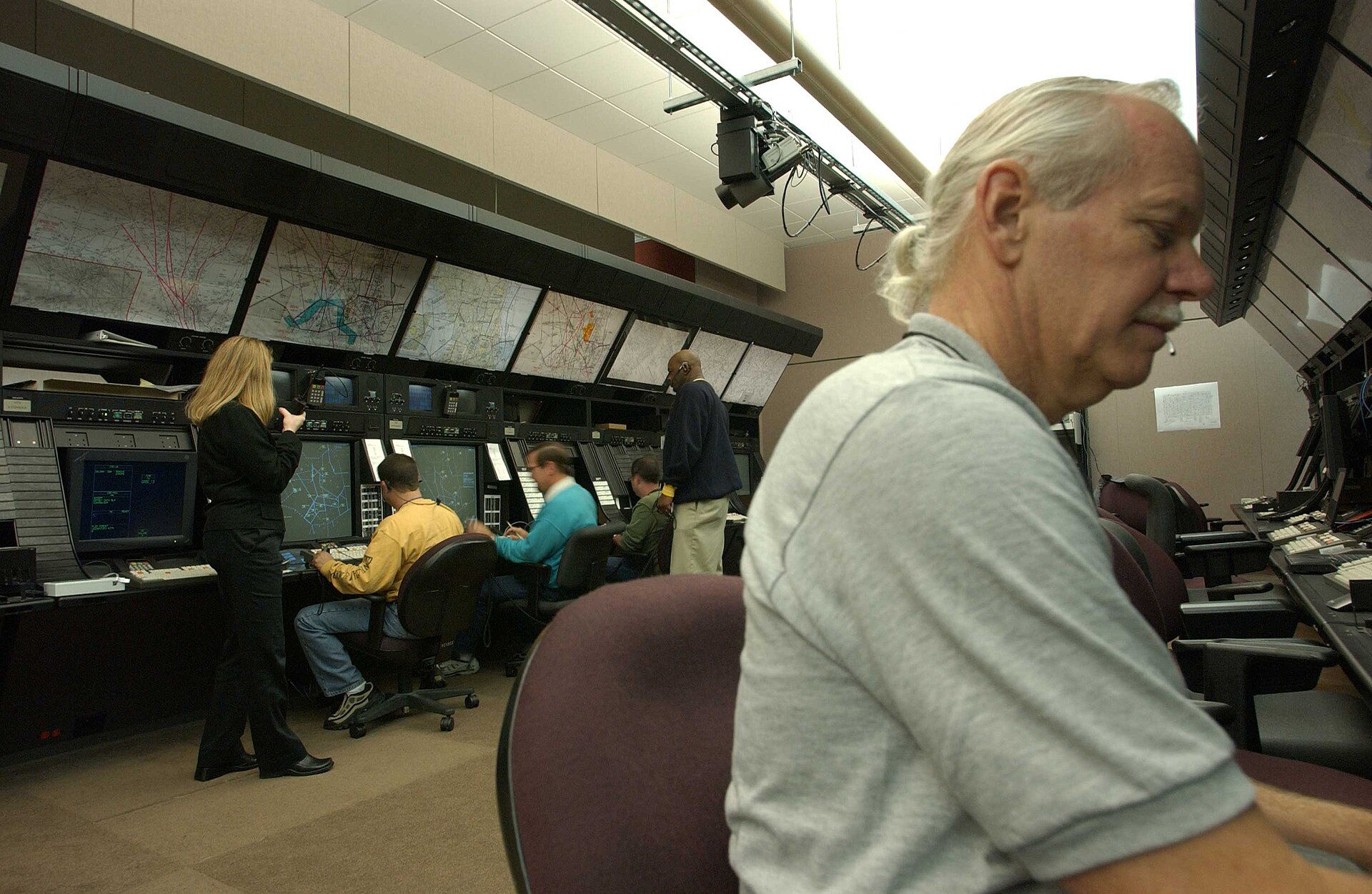
At 3:36 p.m. Washington time on Friday, November 13, radar and communications at US air traffic control centers began to fail, according to Reuters, as republished by Daily Maverick. On planes still on the ground, pilots picked up the microphone with little to say. "Something is going on," one told passengers, in a video published by G1. Nobody knew what. The cause went unidentified for about 45 minutes. Then came the order to halt every departure in the country.
The ground stop lasted more than four hours, the longest since 9/11. The cause was neither an attack nor a storm. According to the government, it was a router in a remote location, during the replacement of copper cables with fiber optics. The episode says a great deal about who controls an infrastructure that looks public.
A thousand attempts every five seconds
Turkey's state news agency Anadolu pieced together the mechanism from official statements in Washington. The faulty router fired more than a thousand connection attempts at the others every four or five seconds. The instability hit 17 of the 22 centers that handle en-route flights. None went down completely, but the FAA, the US civil aviation agency, chose not to take the risk.
Maintenance was in the hands of L3Harris, an aerospace and defense company. Transportation Secretary Sean Duffy said the contractor or the equipment "didn't meet the moment," according to PBS. The root cause has not yet been determined. FAA Administrator Bryan Bedford promised to make it public, according to Al Jazeera. L3Harris said it has already completed more than 70% of the upgrade and is cooperating with the investigation.
The size of the damage depends on who is counting. Bedford spoke of 12,000 flights lost on Friday alone (Anadolu). The tracking site FlightRadar24 counted 6,600 cancellations and 8,600 delays (Reuters). Tracking firms cited by Brasil de Fato estimate that 1.5 million passengers had their itineraries changed.
The shock crossed borders. Eurocontrol, which coordinates European air traffic, suspended flights to the US at the FAA's request, according to Folha de S.Paulo. In Brazil, 21 of 29 flights scheduled for the US were affected, according to the civil aviation agency Anac. In Mexico, it was 193 flights, according to La Jornada. A technical fault in one country reached airports in others with the force of an order.
The version everyone agreed on
The government's first concern was to dispel the specter of an attack. "This is not another 9/11," said Homeland Security Secretary Markwayne Mullin, according to Folha. Then came the explanation that would dominate the weekend: the system is old, and Congress won't pay to replace it. "Give us the money to fix it," Duffy pleaded (Reuters). Congress approved $12.5 billion last year (PBS; TASS). The White House wants another $30 billion, according to PBS. Duffy himself has mentioned $50 billion (Reuters; teleSUR).
The argument is not empty. A week earlier, the FAA had announced that it would not retire the floppy disks still used in air traffic control until 2028. Bedford was blunt: the current network will keep breaking until it is replaced (Anadolu).
What is striking is who repeated the story. The state news agencies of Russia and Venezuela, TASS and teleSUR, voices of governments that rarely spare Washington, reproduced the official version with little distance. teleSUR merely leaned harder on the "collapse" of obsolete equipment. Market-minded outlets such as The Independent and Folha read the outage as a failure of public management: not enough efficiency, not enough targets, not enough accountability for whoever fails. Folha even held up the Brazilian case, where air traffic control was modernized and a nationwide failure is considered less likely. Brasil de Fato also relied almost entirely on official statements.
Moscow, Caracas, Wall Street and the Brazilian left thus reached a rare technical consensus: old cables and tight budgets. When everyone agrees that quickly, it pays to look for what was left out.
Whose cable is it?
The detail almost nobody noticed came from Duffy himself. According to Anadolu, the secretary said that L3Harris, which has worked for the FAA for more than 20 years, owns the agency's legacy telecommunications network. Public documents show how it got there.
In 2002, the FAA hired Harris Corp. for five years and $1.7 billion to modernize and manage air traffic control telecommunications, according to Route Fifty. With all options exercised, the contract could reach 15 years and $3.5 billion. The new network would replace switching networks that belonged to the FAA itself. In 2019, Harris merged with L3 to form L3Harris. On its own website, the company says it is now replacing copper with fiber at every FAA facility. It calls the model a "managed service": the agency buys connections with performance targets, and the company designs, operates and maintains the network.
That contract was supposed to be over. In 2023, Verizon won the competition to take over the network under a new $2.4 billion contract, after two decades of L3Harris. Even so, the FAA had announced in 2022 that it would extend the old contract without competition, according to the federal procurement record. In 2026, the same L3Harris won another contract, to operate the aircraft surveillance network until 2045. And old copper has a price. In 2025, Duffy announced that telecom companies had agreed to stop charging the FAA $800 million a year in obsolescence fees to keep the old system running. On the same occasion, Bedford said the reliability of the agency's telecommunications depends on some 200 companies (Reuters).
In other words, the company that failed during the swap operates the network being swapped and also carries out the swap. That is why the government cannot take its own explanation to the end. It splits the blame between a stingy Congress and a contractor that "didn't meet the moment," but it does not question a model in which the state rents the backbone of an essential service. The billions requested fund the same arrangement. And the investigation is run by the same government that rushed to clear the system.
The market critique also stops halfway. It calls for competent private partners, but the failure happened precisely at the joint between public and private. Reuters noted the stock market's reaction: airline shares fell 1% to 3% after the close. On top of that, airlines are not required to compensate passengers, because the failure was the FAA's. The contract is private, the loss falls on travelers, and the market treats it as a blip. The urgency of that reading is to restore the flow before Thanksgiving, when airlines carry about 2.7 million people a day (Brasil de Fato).
Fewer people for more planes
Behind the cables there are people. Reuters mentions a shortage of several thousand air traffic controllers. An analysis by the GAO, Congress's audit office, cited by Fortune, shows the US has 6% fewer controllers than ten years ago, for 10% more flights. The shortage has led to mandatory overtime. During the outage, controllers could not communicate safely with pilots, a safety expert and former pilot told PBS. Those 45 minutes without a diagnosis fell on them.
The usual answer would be to hire and pay better. But the median salary is already $148,000 a year, and positions remain hard to fill. Fortune describes the job as "one of the highest-stress occupations." The problem is not just pay. It is work organized at the edge of endurance, in a system that only knows how to grow. More money for the same design eases the symptom and keeps the machine running.
The tool that arrived days earlier
There is a layer that has barely been discussed. G1 reported that the FAA extended an artificial intelligence tool to all control centers days before the outage. Bedford denied any link: "zero evidence of anything AI-related," according to Al Jazeera. teleSUR, however, reported that the Department of Homeland Security was assessing whether the integration of new AI-based technologies had overloaded the old systems.
Even if AI had nothing to do with the failure, the timing of its arrival is telling. It enters control centers precisely when controllers are scarce. It could relieve the overworked or serve as a reason not to hire. Public documents do not yet allow us to say which of the two is happening.
The sky no one debates
In none of the sources did anyone ask about scale. And scale is what is at stake. Aviation accounted for 2.5% of energy-related CO₂ emissions in 2023 and, between 2000 and 2019, grew faster than rail, road and shipping, according to the International Energy Agency (IEA). Without measures to curb them, the sector's emissions are set to grow two and a half times between 2015 and 2050, according to International Transport Forum projections cited by the OECD.
There is nothing to celebrate in a forced shutdown. It is not climate policy, and it punished people who needed to travel. The problem lies in what the debate treated as settled without discussing it.
An air traffic control network is not just cables and routers. It is what defines how many planes the sky can hold. Modernizing it so that it can handle more flights is deciding, by technical means, that traffic will grow. And the decision lasts for decades: the surveillance contract L3Harris just won runs until 2045.
The IEA itself, hardly a radical body, includes demand management among the measures needed to keep aviation emissions below 1 billion tonnes in 2030. Demand management means policies that curb the growth of travel. An analysis by the French consultancy Carbone 4, based on IEA scenarios, goes further: traffic growth would have to be held below 3% a year. Efficiency alone is not enough. Suppose other sectors cut emissions as the 2 °C target requires and aviation follows the central scenario of ICAO, the UN civil aviation agency, with efficiency gains of 1% a year. In that case, aviation's share of global emissions would rise to 7% by 2035, Carbone 4 calculates.
None of this entered the discussion about the $30 or $50 billion. The question of how many flights the world can sustain was answered before it was asked, by whoever designs the network's capacity. The implicit answer is that every flight the network can accommodate will fit. That is what it means to settle the environmental question without discussing it: the political choice is embedded in a technical specification, and the cable looks neutral.
What remains up in the air
Would a state-owned network be more reliable? This piece cannot prove it. Before 2002, the FAA had its own networks, which were replaced precisely because they were old and fragmented. The Brazilian example shows modernization is possible, but the available material does not say under which model.
The critique of growth also runs into real people. Five Brazilian artificial intelligence engineers were stranded at an Ohio airport by an outage that, according to the government, has nothing to do with AI. The irony is good, but it does not change the fact: people's lives still pass through this system.
And the contradiction reaches whoever is writing. This analysis bets on AI as a possible instrument of emancipation, yet one of its first tests in critical infrastructure is happening without transparency. It also depends on the same official sources it criticizes. The report Bedford promised will tell part of the truth. The other part does not fit in a technical report.
If the network that guides the planes belongs to whoever sells it to the state, and if the only debate allowed is how to make it carry more flights, who decides, in the end, what the sky is for?
Sources
- Daily Maverick (republica Reuters) — ■ Privada, África do Sul · ■ private, ZA
- G1: vídeo do piloto — ■ Privada, Brasil · ■ private, BR
- Anadolu: FAA e falas de Duffy — ▲ Estatal, Turquia · ▲ state, TR
- Anadolu: nota da L3Harris — ▲ Estatal, Turquia · ▲ state, TR
- PBS NewsHour — ● Pública, EUA · ● public, US
- Al Jazeera — ▲ Estatal, Catar · ▲ state, QA
- TASS — ▲ Estatal, Rússia · ▲ state, RU
- teleSUR — ▲ Estatal, Venezuela · ▲ state, VE
- Brasil de Fato — ◆ Independente, Brasil · ◆ independent, BR
- Folha: fala de Mullin — ■ Privada, Brasil · ■ private, BR
- Folha: Eurocontrol — ■ Privada, Brasil · ■ private, BR
- Folha: voos do Brasil — ■ Privada, Brasil · ■ private, BR
- Folha: disquetes — ■ Privada, Brasil · ■ private, BR
- Folha: modernização no Brasil — ■ Privada, Brasil · ■ private, BR
- La Jornada — ■ Privada, México · ■ private, MX
- The Independent — ■ Privada, Reino Unido · ■ private, UK
- Route Fifty: contrato FTI de 2002 — ■ Privada, EUA
- Washington Technology: fusão L3Harris (2019) — ■ Privada, EUA
- Washington Technology: contrato da Verizon (2023) — ■ Privada, EUA
- HigherGov: registro federal da prorrogação (2022) — ■ Privada, EUA
- L3Harris: programa FTI (fonte interessada) — ■ Privada, EUA
- The Star (republica Reuters, 2025) — ■ Privada, Malásia
- G1: ferramenta de IA — ■ Privada, Brasil · ■ private, BR
- G1: engenheiros retidos — ■ Privada, Brasil · ■ private, BR
- Fortune (dados do GAO e do BLS) — ■ Privada, EUA
- KRDO — ■ Privada, EUA
- Agência Internacional de Energia — organismo intergovernamental
- OCDE (projeção do ITF) — organismo intergovernamental
- Carbone 4 — ■ Privada (consultoria), França
Editor in charge: Prof. Dr. Adriano de Assis Ferreira · Lattes · ORCID