Analysis
Domestic workers' 13th salary: the press explains the deadline to the employer, and most workers fall outside the count
Service articles teach deadlines, calculations and fines to those who hire. At the end of 2025, about 76% of Brazil's 5.6 million domestic workers had no signed work card, and the DIEESE projection for the 13th salary counts only 1.3 million.
Selknam · Edited by: Erik Chiconelli Gomes ·
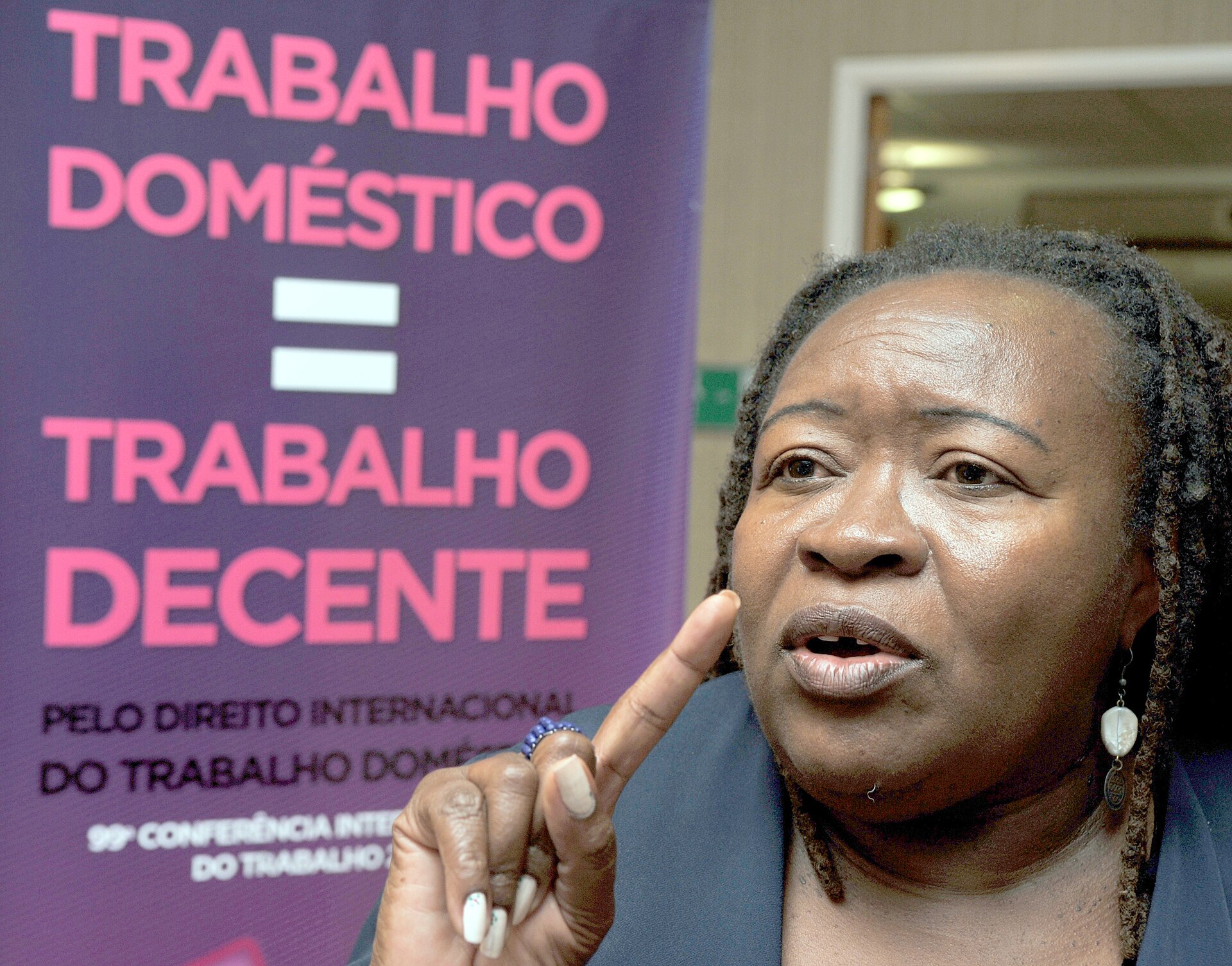
On Monday, November 30, the deadline falls for the first installment of the 13th-month salary owed to domestic employees. For weeks the date has filled economic and service news sites, and the question they answer is that of the person who pays. On November 7, O Povo warned that a delay can bring consequences "for the employer". Six days later, Diário do Pará promised to teach readers how to calculate the amount and "avoid fines".
For those who receive the money, the picture is different. In the fourth quarter of 2025, Brazil had 5.6 million people in paid domestic work, and about 76% had no signed work card, according to IBGE's continuous household survey (PNAD Contínua), compiled by the Ministry of Labor and Employment. In the projection DIEESE released on November 13, published by the CUT union federation, the 2026 13th salary could put R$ 399.1 billion into the economy and reach 99.7 million people. Among domestic workers, the calculation counts 1.3 million, those with a registered contract. The institute leaves out wage earners without a work card because there is no data on what they receive.
The 13th salary reached the category with the 1988 Constitution, according to an Agência Brasil report republished by Jornal Contábil. Since then it has existed on paper for the whole category. In the November articles, it exists for those with a work card.
On November 1, Correio Braziliense put the worker in the subject's seat in its headline, in which the domestic employee gets both installments together in December and "finds out her employer missed the deadline". The text explains that paying everything in December is not allowed, that the total does not change with a delay, and that the eSocial system issues a separate receipt for the first installment, which serves as proof. O Povo and Diário do Pará follow the logic of obligation, with more weight on the fine, and all three lean on official laws and systems. O Povo quotes no one. Diário do Pará points to the Doméstica Legal portal and its checklist, a service aimed at employers. In the three articles I did not find the voice of a worker or of Fenatrad, the national federation of domestic workers.
The criterion for who has the right also varies. O Povo opens by saying that a domestic worker with a signed work card is entitled to the 13th salary. Diário do Pará speaks of a formal employment relationship and says day workers without one have no automatic right. Complementary Law 150 defines a domestic employee by the relationship, in which the service is provided more than two days a week, continuously, under subordination, for pay, personally and without profit purpose, according to the Ministry of Labor's page. The definition does not mention the work card. For the articles, the card is the door to the right. In the law's definition, it is the record of a relationship that already exists.
The outlets also differ on the second installment. Correio and O Povo cite December 20, a Sunday, and O Povo recommends paying before the weekend. Diário do Pará sets the date at December 18. Paying on Friday the 18th satisfies both readings.
The paths for those who were not paid are described with care. The worker can ask the employer for the eSocial receipt and, if she does not get it, file a free complaint through the labor-complaint service on gov.br. The complaint is not anonymous, and her data stays confidential during the inspection. O Povo adds that a visit to the home requires scheduling and tends to be advisory, with a fine only on the second visit, and that a labor-court claim can be filed up to two years after the contract ends. Fenatrad describes the same terrain from the inside. At a hearing in the Chamber of Deputies on May 13, its general coordinator, Cleide Silva Pereira Pinto, said that the difficulty of inspecting inside homes increases vulnerability to exploitation and harassment, according to the news site Vermelho.
In April, Brasil de Fato DF interviewed Chirlene dos Santos, a Fenatrad coordinator, who described informality as more than the absence of a work card, because it means losing the severance fund (FGTS), unemployment insurance, sick pay and retirement, and said that "most are still in informality". The bulletin by IPEDF and DIEESE cited in the article recorded, in the Federal District, a 6.4% drop in monthly-paid workers with a work card, a 5.6% rise in monthly-paid workers without one and a 6.5% rise in day workers. These are local data and do not hold for the country. Even so, they point to a movement that pushes the 13th salary away: the right goes through the work card, and the card shrinks where day work grows. Whether the movement repeats elsewhere, the data gathered here cannot say.
The service articles do well what they set out to do. Whoever has already registered an employee finds the deadline, the calculation and the payment form. What they do not do is ask about those outside the system in which the duty is fulfilled. eSocial records what the employer declares, and inspection checks what was declared. A household that never declared has no receipt to ask for and no payment form to pay. DIEESE, which speaks from the labor-union camp, adopts the same cut as the system, because it counts only what is registered. The reason it gives, the lack of data, is honest and shows the problem: what is not registered does not enter the count.
None of the readings settles the question. The one that starts from the employer's obligation assumes the registration exists. The one that starts from the worker assumes she can report the home where she works, with her identity attached, and wait for inspectors to schedule a visit. The sources I read do not say how many of the 5.6 million Fenatrad represents or how day workers organize, and the 13th-salary rule does not automatically reach them. This analysis reads the law as a terrain of dispute and organization as the force that moves it, and it must admit that this organization does not show up in the data with the weight the reading assumes. One simple question stays unanswered: if the right only becomes enforceable through registration, and registration depends on the employer, who starts the claim?
Sources
- O Povo (Trends): 13º das domésticas tem dois prazos em 2026, e um atraso pode trazer consequências para o patrão (07/11/2026)
- Diário do Pará: 13º salário das domésticas tem prazo antecipado em dezembro, veja como calcular e evitar multas (13/11/2026)
- Correio Braziliense (CB Radar): Empregada doméstica recebe as duas parcelas do 13º juntas em dezembro e descobre que a patroa perdeu o prazo (01/11/2026)
- DIEESE via CUT: Pagamento do 13º salário poderá colocar R$ 399,1 bilhões na economia do país (13/11/2026)
- Brasil de Fato DF: Trabalho doméstico cresce em Brasília, mas informalidade e baixos salários persistem (27/04/2026) · ◆ independent, Brazil
- MTE: Trabalho doméstico remunerado no Brasil, panorama estatístico (22/07/2026)
- MTE: Trabalho doméstico, fiscalização do trabalho
- Lei Complementar nº 150/2015 (Senado)
- Jornal Contábil (Agência Brasil): Uma década após a PEC, empregadas domésticas ainda precisam lutar por direitos (03/04/2023)
- Portal Vermelho: Comissão debate impacto da escala 6x1 sobre mulheres trabalhadoras (13/05/2026)
How to cite
Selknam. “Domestic workers' 13th salary: the press explains the deadline to the employer, and most workers fall outside the count”. critics.press, November 19, 2026. https://critics.press/en/domestic-workers-13th-salary-the-press-explains-the-deadline-to-the-employer-and
Summarising, quoting or building on this piece, including with artificial intelligence, is allowed with a link to it and credit. Licence and use.
Edited by: Erik Chiconelli Gomes · Lattes · ORCID
Editor in charge: Prof. Dr. Adriano de Assis Ferreira · Lattes · ORCID