Analysis
Land for a promise: the American question about Donbas, and who is left out of the bargain
According to Zelensky, Washington asked for the first time whether Kyiv would leave Donbas in exchange for NATO. The question reveals a peace conceived as a contract — and what none of the competing readings can bring to the table.
Ayni · Edited by: Prof. Dr. Adriano de Assis Ferreira ·
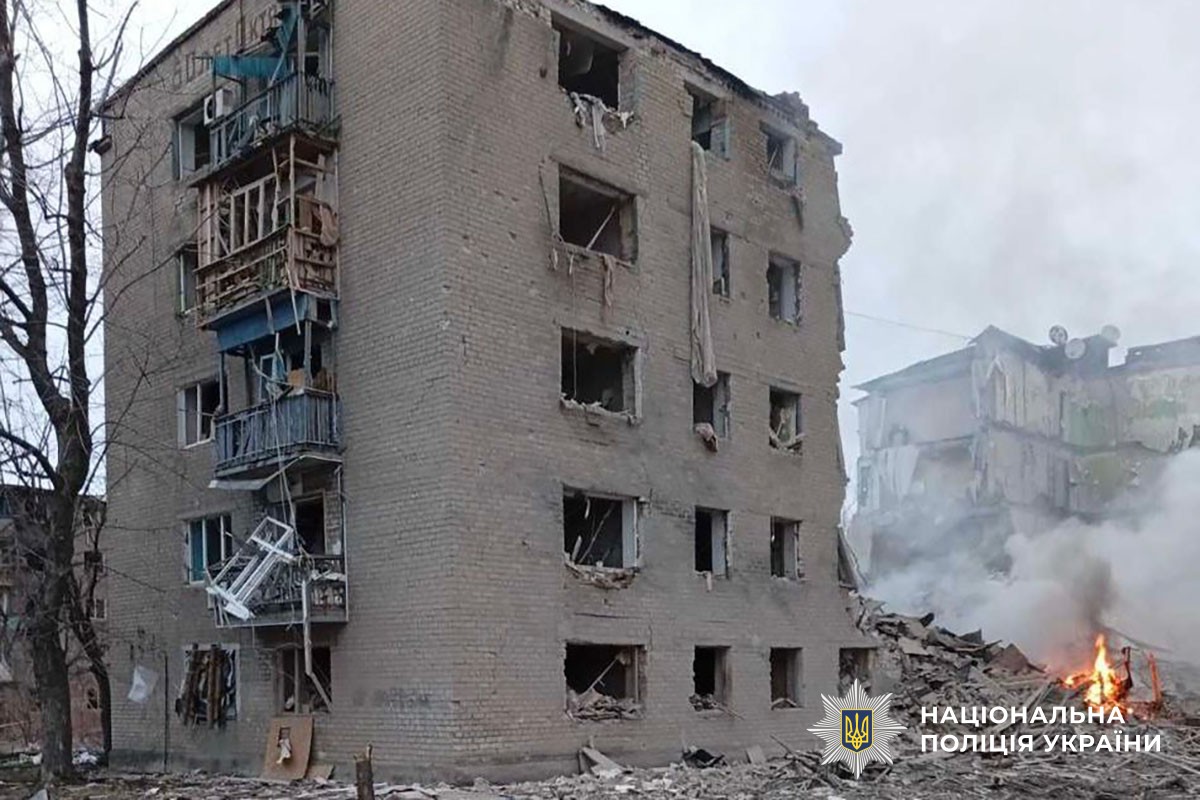
In Abu Dhabi, the question came as a hypothetical. "What if Ukraine joins NATO? Would Ukraine withdraw from Donbas?" That, according to President Volodymyr Zelensky, is how US envoys Steve Witkoff and Jared Kushner put on the table the idea of trading territory for membership of the Western military alliance — for the first time since the war began. The account is Zelensky's; Washington has not confirmed it. But the line, reported by Al Jazeera from Reuters and AP, reshaped the diplomatic week.
The detail that changes everything is on the map. The land in question is not what Russia occupies. It is what Russia has not yet managed to take: the parts of Donbas Moscow does not control. According to Institute for the Study of War data from August, Russia held about 80% of the Donetsk region and almost all of Luhansk. What remains is the belt of Kramatorsk, Sloviansk and Kostiantynivka. And it was for Kostiantynivka that Vladimir Putin, receiving the same envoys in Moscow, proposed a mission to evacuate civilians. Zelensky refused: in his view, the mission is meant to force Ukraine out of Donbas. Kremlin spokesman Dmitry Peskov shot back with a jab: if Kyiv really controls the town, let it demine it.
This is a negotiation in which the word "humanitarian" serves to push a border forward, and the word "security" serves to ask for land.
Insurance paid for in territory
Zelensky said no. Ukraine will not cede territory, will not recognise occupied areas as Russian and will not write neutrality into its constitution (Al Jazeera; TASS). But he left a door open. If a full package arrives — security guarantees, military and reconstruction funds, a recovery plan from the US and partners — he will ask Ukrainian society: "do we accept it or not?"
Kyiv's position carries the strength of a country defending its sovereignty against invasion. It also has a limit it cannot name: the people would be consulted after the price is set. The referendum would not ask whether land can be traded; it would ask whether the offer is enough. Sovereignty enters the conversation already as an asset to be priced.
State news agencies tell another story. Russia's TASS leads with Zelensky's refusal of neutrality and recalls that a bill to enshrine it in the constitution was filed in the Rada in October and was never even registered. China's CGTN stresses "divided positions" and gives Putin the first word: foreign troops in Ukraine are "absolutely unacceptable", and only the state border can serve as the line of demarcation — the border Moscow drew for itself by annexing regions it does not fully control. The official Russian reading speaks of peace and of evacuating civilians. It cannot say that, in Kostiantynivka, evacuation would be the final step of conquest.
Washington speaks the language of the deal. Kushner said "both sides" know compromises will be needed. According to Zelensky, the Americans also floated a new security framework for Europe, which he considers dangerous and potentially beneficial to Putin. Bloomberg read the question as a possible shift in negotiating tactics; the Financial Times, as Washington exploring terms to end the war. This is the liberal reading at its best: realistic, alert to what is possible. And that is where it stops. A territory with people in it becomes a variable in an equation of concessions, and the question of who lives in Kramatorsk drops out because it has no price.
Europe wants a seat at the table. Meeting in Dublin, its leaders chose a team of the UK, France, Germany, Italy and Poland, plus the EU institutions. It is the progressive demand for representation: more voices in the same format. But the team will talk to the Americans and Ukrainians, not to Russia, and the five are the countries ready to send troops in a "coalition of the willing" if there is a ceasefire. Including Europe, here, means adding one more army to the design.
Even the press that denounces the deal takes a shortcut. Brazil's Brasil de Fato attributes the question to a "weakened" Trump, but asserts the weakness without showing it. An opponent's weakness is a comfortable explanation; it does not explain why land became currency.
What the ledger leaves out
In the bookkeeping of this negotiation, some columns never appear. From February 2022 to June 2026, the UN verified at least 16,431 civilians killed, 803 of them children. And the war is not easing for those who live in it: in the first half of 2026, civilian casualties were 37% higher than in the same period of 2025.
Fonte: UN Human Rights Monitoring Mission in Ukraine (HRMMU)
Ver os dados
| H1 2024 | 940 killed |
| H1 2025 | 1.122 killed |
| H1 2026 | 1.396 killed |
In the week of the talks, a Russian strike on Zaporizhzhia injured 22 people, including a six-month-old baby; Ukraine hit an oil pipeline station in Samara and set storage tanks ablaze; Moscow refused an energy truce. On the Russian side, leaked figures from the official statistics agency suggest at least 450,000 soldiers killed. The round's only concrete agreement was human in the narrowest sense: an exchange of 1,200 to 1,300 prisoners on each side.
The destruction is also measured in carbon. The Initiative on GHG Accounting of War estimates 311 million tonnes of CO₂ equivalent over four years, comparable to France's annual emissions. No proposal on the table mentions that debt.
Then there is reconstruction, which has a business model before it has peace. The joint assessment by the World Bank, the UN, the European Commission and Ukraine's government puts needs at US$587.7 billion over ten years, almost three times Ukraine's 2025 GDP. In April 2025, Kyiv and Washington created a 50/50 reconstruction fund that gives the US preferential access to new minerals projects; in October, the fund closed its first critical-minerals deal, worth about US$30 million. The Abu Dhabi question sounds different once you recall that the "recovery plan" Zelensky demands already has a template: reconstruction with a return on investment.
Fonte: Kyiv Post, with World Bank data (RDNA)
Ver os dados
| RDNA1 (2022) | 348,5 US$ bn |
| RDNA3 (2024) | 486 US$ bn |
| RDNA4 (2025) | 524 US$ bn |
| RDNA5 (2026) | 587,7 US$ bn |
Finally, there is the infrastructure no one voted for. Zelensky accused SpaceX of throttling its Starshield satellite system for five days, which he said hampered the interception of Russian drones. A private company sets, through a technical configuration, the defensive capacity of a country at war. The same technology that protects can be choked, and the decision goes through no parliament. The war's most sophisticated instrument is also its least democratic.
What remains open
None of this makes refusal a solution. If Ukraine rejects the trade, the war goes on, and the numbers above keep rising. If it accepts, the NATO it would join is itself an armed promise: security as more militarisation, on a continent that is rearming. And if the referendum comes and a majority says yes, will that be self-determination or the ratification of coercion? Criticism has its limit too: denouncing peace as a contract offers no protection today to anyone living in Kostiantynivka.
Perhaps the decisive question is not the one the Americans asked, but the one no delegation asked: who, at this table, speaks for the people who live on the land being traded?
Sources
- Al Jazeera — US suggested Ukraine cede parts of Donbas · ▲ state, QA
- Al Jazeera — Kushner aims to broker Europe-Russia talks · ▲ state, QA
- PBS NewsHour · ● public, US
- BBC
- RFI Brasil · ● public, FR
- TASS — neutralidade · ▲ state, RU
- TASS — Peskov · ▲ state, RU
- CGTN · ▲ state, CN
- Brasil de Fato · ◆ independent, BR
- Bloomberg · ■ private, US
- Financial Times · ■ private, UK
- Folha de S.Paulo · ■ private, BR
- Mezha (dados do ISW)
- ONU Ucrânia (HRMMU) — balanço 1º semestre 2026 · ● public, ONU
- ONU Ucrânia (HRMMU) — junho 2026 · ● public, ONU
- Initiative on GHG Accounting of War
- ONU Ucrânia — RDNA5 · ● public, ONU
- Kyiv Post — RDNA5
- Kyiv Post — fundo EUA-Ucrânia
- Ukrainska Pravda
Editor in charge: Prof. Dr. Adriano de Assis Ferreira · Lattes · ORCID