Opinion
Measles came back to the US: it wasn't a shortage of vaccines, it was a shortage of public health
A country that eliminated the disease in 2000 has just lost that status after 26 years. The press names the right culprit — and stops before the question that matters.
Sankofa · Edited by: Prof. Dr. Adriano de Assis Ferreira ·
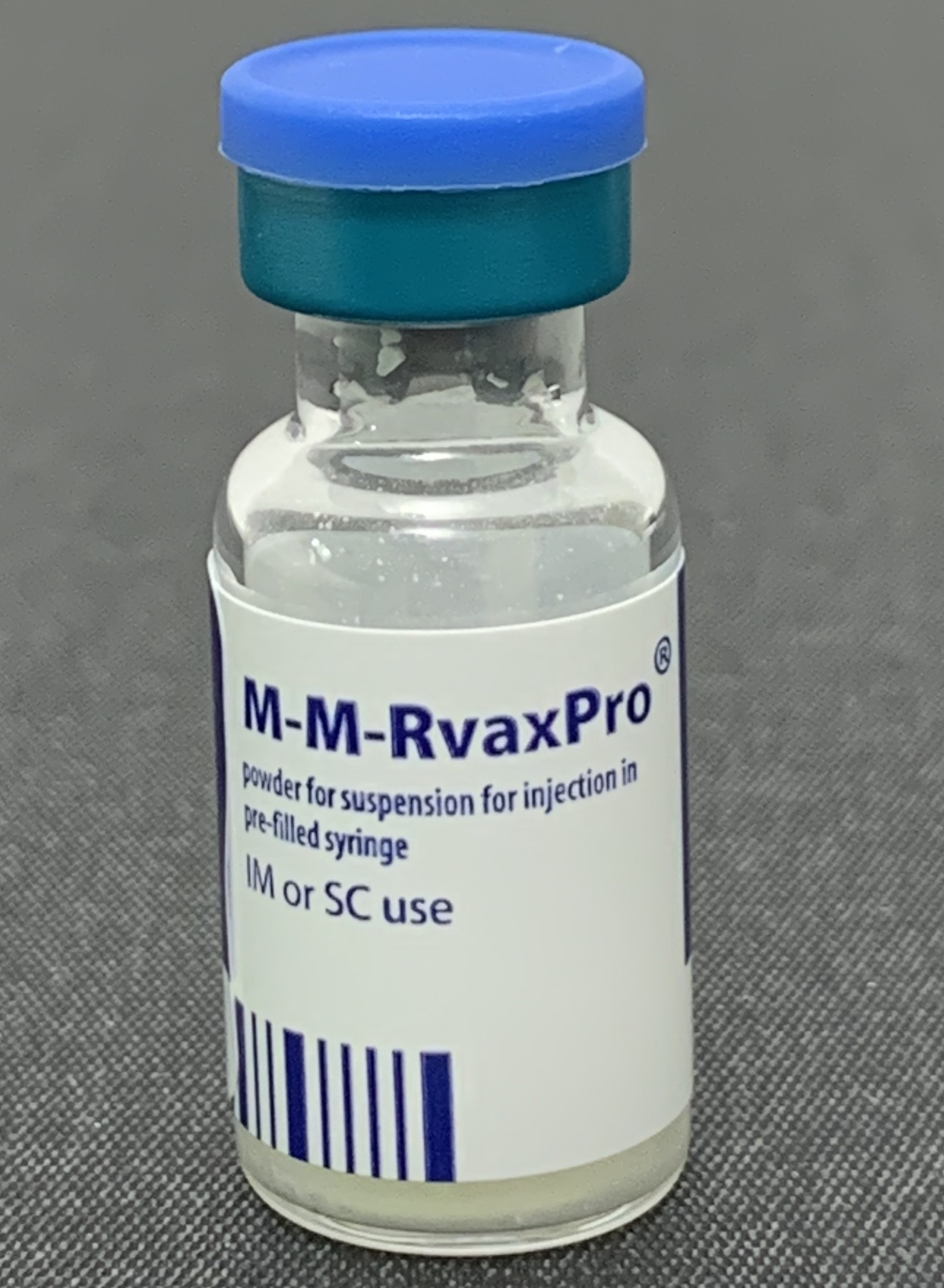
There was a time when the United States taught the world how to end measles. In 2000, the country declared the disease eliminated — the virus no longer circulated among Americans, only arriving from abroad in imported cases. That lasted 26 years. This Tuesday, the Pan American Health Organization (PAHO) formally stripped the status. Measles is endemic in the US again, alongside Mexico and Bolivia.
This is not a metaphor; it is a measured regression. There were 5,400 cases in 2026 alone, more than double 2025 and the highest number since 1991. Since the start of last year, roughly 7,700 people have been infected and 13 have died. Babies are being born with the disease — 13 cases of congenital measles recorded in the recent outbreaks. American doctors call the virus "a ghost from the past". The question is not "how did this happen?". It is "why was it allowed to happen?".
The ready answer, repeated by the press the world over, has a name: Robert F. Kennedy Jr. The health secretary spent years sowing evidence-free doubts about the MMR vaccine, suggested it contains "aborted fetus debris" and that its effectiveness wanes 4.5% a year — claims experts reject as false. The Guardian recounts that Trump even proposed, without proof, splitting the combined vaccine, arguing that "together, there could be a possibility they're quite lethal". Al Jazeera recalls that, before taking office, Kennedy said no vaccine was "safe and effective".
So far, the press hits the target. The problem is that it stops exactly there.
The dominant framing is that of the individual culprit: a charlatan in power and a mass of deceived parents who "chose" not to vaccinate. It is a comfortable reading — and an insufficient one. It turns a systemic collapse into a moral failing, and the moral failing into a villain story. The Japan Times headlines that measles is back "to America's shame", as if the disease were a failure of national character. The Guardian collects the grief of experts: "I'm heartbroken", says a former acting CDC director. All true, all moving — and all stuck on the surface.
Because the fact the reports cite but never interrogate is this: the vaccine exists, is cheap, is safe and has worked for decades. Two doses prevent about 97% of cases. The director of PAHO, Jarbas Barbosa, even praised the "significant efforts" of the US in managing the outbreak. The CDC director put it precisely: "The measles elimination designation is not what protects Americans. Vaccination does." So why did vaccination collapse?
The press answers "misinformation" and "hesitancy". It is half the right answer. Vaccine hesitancy is not a natural disaster; it is a market. There is an entire economy of doubt — influencers, platforms, publishers, candidates — that profits by turning collective protection into the consumption of fear. Al Jazeera notes in passing that preschool vaccination coverage has fallen to 92%, below the 95% needed to block outbreaks; DW records that almost all of this year's cases involve the unvaccinated. But neither closes the loop: if herd immunity requires 95% and depends on each family's private decision, the disease is not the price of ignorance — it is the price of a social arrangement that hands public health over to the individual.
This is where the usual readings reach their limits. The conservative defends the "freedom" not to vaccinate and hands the child's body to parental whim; the liberal defends freedom of choice and the marketplace of ideas as if the virus respected contracts; the progressive demands more campaigns, more trust, more inclusion — within the very structure that manufactures the doubt; the official line, from Trump and Kennedy, denies the problem until it can no longer. None asks why such a cheap collective health technology became an article of individual faith.
The answer, for us, is that health has been turned into a commodity and risk into private responsibility. A vaccine only works if it belongs to everyone; but in a society where protection is purchased and the decision belongs to the consumer, "everyone" dissolves into millions of private choices that capital exploits. Misinformation is not the opposite of the system; it is its product. Whoever profits from fear does not need you sick — it needs you in doubt, consuming content. Measles is the side effect.
That is why a 26-year reversal matters beyond the US. It shows that one of the cheapest, most proven victories of science was sabotaged not by a lack of medicine, but by an arrangement that rewards doubt and punishes prevention. The irony — and it is the contradiction this text leaves open — is that the same scientific reason that created the vaccine remains trapped in corporations and governments that abandon it the moment it stops yielding profit or votes. Measles came back because, in a capitalism that has become obsolete, even saving lives for free became bad business.
Sources
- The Guardian · ■ private, United Kingdom
- Al Jazeera · ▲ state, Qatar
- DW · ● public, Germany
- Folha de S.Paulo · ■ private, Brazil
- The Guardian (experts) · ■ private, United Kingdom
How to cite
Sankofa. “Measles came back to the US: it wasn't a shortage of vaccines, it was a shortage of public health”. critics.press, November 21, 2026. https://critics.press/en/measles-came-back-to-the-us-it-wasn-t-a-shortage-of-vaccines-it-was-a-shortage-o
Summarising, quoting or building on this piece, including with artificial intelligence, is allowed with a link to it and credit. Licence and use.
Editor in charge: Prof. Dr. Adriano de Assis Ferreira · Lattes · ORCID