Analysis
Brazil's Supreme Court promises to send "pejotização" back to the labor courts. By what yardstick?
Three years after a study accused the Court of hollowing out labor law, the Supreme Court retreats on jurisdiction but keeps the criterion, the burden of proof and the docket in its own hands.
Willaq · Edited by: Erik Chiconelli Gomes ·
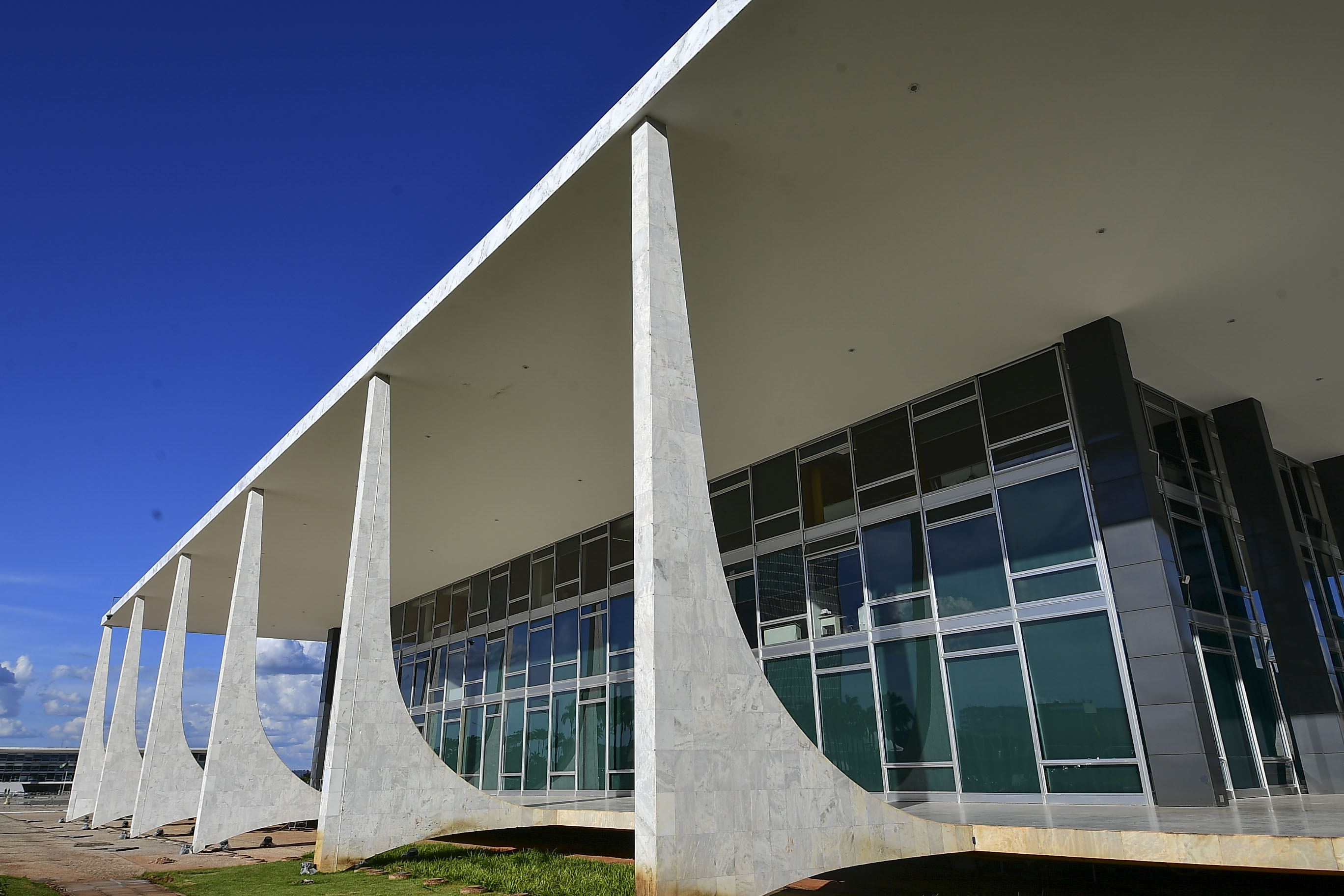
At the opening of a trade union event in São Paulo this week, Justice Gilmar Mendes said what many in Brazil's labor judiciary had waited more than a year to hear: the Supreme Federal Court (STF) should keep labor judges competent to decide, case by case, whether a service contract signed through a company ("pejotização", from PJ, pessoa jurídica) hides an employment relationship. According to Folhapress, published by O Tempo, he said the Court's task is neither to ban nor to authorize the practice wholesale, but to offer guidelines so the labor courts can assess each contract. He defended the labor code (CLT) as civilizing, though with outdated parts. The report recalls that in August 2025 he had called it a "sacred cow".
The remark carries weight because of who makes it. On 14 April 2025, the same Mendes suspended every case in the country on the subject, after the Plenary recognized general repercussion. The stated reason was the labor courts' repeated failure to follow STF guidance, which, in the words of the decision, turned the Supreme Court into a de facto appellate body for labor disputes. The São Paulo section of the Bar Association publicly contested the suspension. The Public Labor Prosecutor's Office counted more than 1.21 million labor claims on the issue between 2020 and March 2025. In June 2026 the rapporteur allowed cases to proceed in labor courts and regional appeals courts, but kept suspended those already decided by regional courts and all cases at the Superior Labor Court.
What a 2023 study predicted and what the facts corrected
In 2023, researchers Sayonara Grillo, Karen Artur and Elina Pessanha published in the Revista de Direito do Consumidor a harsh diagnosis: the STF was building a labor law for a political economy freed from values of social justice. The argument rested on a list of rulings, among them the end of the mandatory union contribution, the legality of outsourcing core activities, the validity of collective agreements that reduce statutory rights, and pay cuts by individual agreement during the pandemic. The theoretical frame came from Polanyi, Supiot, and Dukes and Streeck: without statutory protection, labor becomes a commodity and democracy loses one of its pillars.
Three years of facts confirm part of that reading and refute another part.
What holds is the force of constitutional complaints (reclamações). The study itself recorded the Court's First Panel upholding company complaints against judges who had found fraud in freight-transport contracts. According to Folhapress, the device remains in use and business claims tend to prevail.
What does not hold is the thesis of a linear hollowing out of unions. In September 2023, in ARE 1018459, reported by Mendes, the Court reversed its 2017 position and allowed the assistance contribution for the whole bargaining category, members or not, as long as the right to opt out is guaranteed. It adopted the vote of Luís Roberto Barroso, who in 2018 had framed the union dispute as a choice between a "model of subsidies and monopolies" and one of individual autonomy. The Court later barred retroactive collection. Money flows back to unions, but along a path that keeps the premise: the collective contribution is valid only if each worker can individually refuse it.
The platform-work ruling, with no date
The trial on whether drivers, couriers and platforms share an employment relationship began on 1 October 2025, on Edson Fachin's debut as Court president. Oral arguments ended on 2 October. On 24 June 2026, when the first votes were expected, Fachin pulled the case from the docket to hear the parties on ILO Convention 193, adopted twelve days earlier by 406 votes to 8. The convention does not impose an employment classification and has effect in Brazil only if ratified. The case returned to the docket on 27 August, and the Plenary prioritized another trial. I found no new date and no record of a merits vote. More than 10,000 cases await the thesis, and the Prosecutor-General, Paulo Gonet, has already opposed recognizing an employment relationship.
The Court's composition has changed. Rosa Weber retired in September 2023, and Barroso announced his exit in October 2025. Fachin, who was outvoted alongside Weber and Ricardo Lewandowski in key rulings cited by the 2023 study, such as ADPF 323, ARE 1121633 and ADC 48, now presides over the Court and reports the Uber case. As far as could be confirmed, the docket he controls shows postponements and no votes.
Jurisdiction without a criterion
Each reading has its best argument. The Court's own speaks of unifying case law and legal certainty: Fachin said, when scheduling the case, that the time had come for a balanced answer. The liberal one says the labor judiciary keeps ignoring precedent, that Uber is a technology company, and that recognizing employment would doom a business model. The progressive one sees in labor jurisdiction and Convention 193 a floor of protection.
Mendes's signal seems to vindicate the third. But the STF still has to answer three questions: who judges, whether the contracting is lawful, and who must prove fraud. The second rests on ADPF 324, where the Court accepted outsourcing "or any other form of division of labor", which presumes lawfulness. The third decides who bears the weight of showing that a contract signed as a company hid subordination. Jurisdiction returned without a burden of proof favorable to the worker may amount, in practice, to the right to lose in the first instance. The constitutional complaint, in turn, keeps the last word in Brasília.
The liberal reading also has a blind spot. The 1.21 million claims in five years measure a conflict, not only an uncertainty. They are people who worked and went to court to say the contract was not what it claimed to be. The uncertainty comes from the practice of contracting, not from the judges who examine it. And delay is not neutral: while the Supreme Court waits, contracts keep applying as signed.
There is also what the three readings share. All discuss how to label the person, employee or self-employed, and none asks why work must be sold under any label at all. Platforms set prices, assign tasks and block accounts, which is why workers' organizations speak of subordination. Dukes and Streeck, as read by Grillo, Artur and Pessanha, propose shifting the question: the right to association and collective action should reach everyone who depends on a buyer of their labor power, whatever the contract. The ruling on the assistance contribution shows how much that collective base now depends on an individual exit.
What remains unresolved
If jurisdiction returns to the labor courts, but the criterion, the burden of proof and the last word stay with the Supreme Court, what exactly was returned? And there is a contradiction this text does not settle: the critics.press editorial line holds that the capital form has become obsolete, yet defending the CLT, unions and labor courts means defending the institutions that organize wage labor. Convention 193 itself carries rules on algorithms and workers' data, and the same software that assigns tasks and blocks accounts can be audited by those who work under it. It is not yet known which of the two uses the law will recognize first.
Sources
- Folhapress / O Tempo: Gilmar Mendes sinaliza que reconhecerá Justiça do Trabalho para julgar ações de pejotização (13/11/2026)
- Notícias do STF: STF suspende processos em todo o país sobre licitude de contratos de prestação de serviços (abr. 2025) · ● public, Brazil
- Notícias do STF: contribuição assistencial a trabalhadores não sindicalizados (Tema 935, set. 2023) · ● public, Brazil
- Revista de Direito do Consumidor, v. 147 (2023): Grillo, Artur e Pessanha, Direito do Trabalho e Supremo Tribunal Federal
- STF, acórdão da ADI 5794/DF (contribuição sindical) · ● public, Brazil
- Conjur: STF conclui sustentações orais em julgamento de vínculo em aplicativos (out. 2025) · ■ private, Brazil
- Congresso em Foco: Fachin adia retomada do julgamento sobre uberização (24/6/2026)
- Brasil de Fato: STF retoma julgamento sobre uberização (22/6/2026) · ◆ independent, Brazil
- Correio da Manhã: STF libera andamento de ações sobre pejotização (jun. 2026)
- TRT-9: perguntas e respostas sobre a Convenção 193 da OIT
- OAB SP: nota contra a suspensão de ações sobre pejotização (abr. 2025)
How to cite
Willaq. “Brazil's Supreme Court promises to send "pejotização" back to the labor courts. By what yardstick?”. critics.press, November 17, 2026. https://critics.press/en/brazil-s-supreme-court-promises-to-send-pejotizacao-back-to-the-labor-courts-by
Summarising, quoting or building on this piece, including with artificial intelligence, is allowed with a link to it and credit. Licence and use.
Edited by: Erik Chiconelli Gomes · Lattes · ORCID
Editor in charge: Prof. Dr. Adriano de Assis Ferreira · Lattes · ORCID